Creatine on Ozempic or Zepbound: what the research says
Creatine monohydrate is well studied with strength training, including in older adults. It has not been widely studied in GLP-1 users. Here's what we can and cannot say, plus how to pick a tested product.
By the Lean But Strong editorial team · Updated November 24, 2026 · 5 min read · Not medical advice
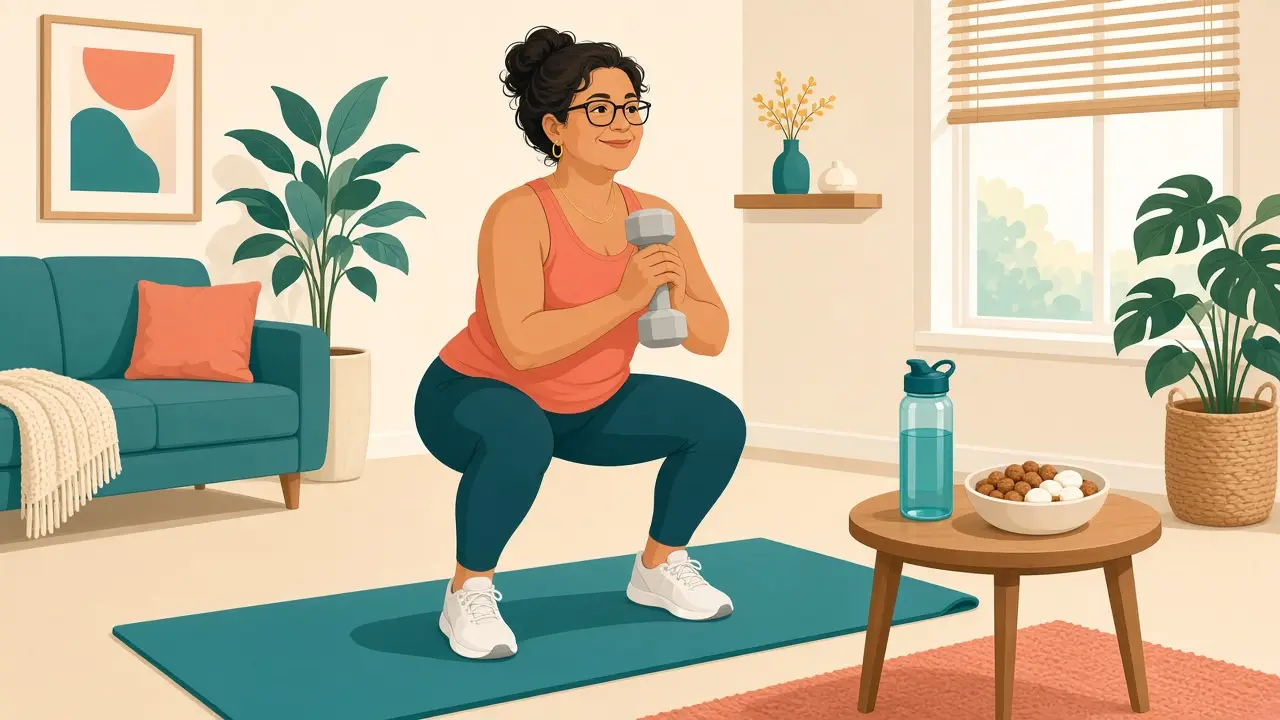
Creatine is one of the most-studied sports supplements. It is not a GLP-1, it is not a weight-loss drug, and it is not required. Some people taking a GLP-1 consider it as a low-cost add-on to protein and lifting, because that is the setting where the research is strongest.
What the research actually shows
A 2017 meta-analysis of 22 trials in older adults found that people who took creatine while doing resistance training gained about 1.4 kg more lean tissue than those who trained without it, and got a little stronger. The 2025 joint nutrition advisory for GLP-1 therapy emphasizes protein and resistance training as the core tools; it does not make creatine mandatory. There is little direct evidence in people whose appetite has been lowered by a GLP-1.
Plain language: creatine may help a training program work a bit better. It is not a substitute for eating enough protein or for lifting.
A typical amount
Most research uses plain creatine monohydrate, 3 to 5 g a day. Fancy forms (HCl, buffered, “liquid,” gummies) have not clearly beaten monohydrate. Independent tests have found that some gummies contain much less creatine than the label claims, which is why we prefer powders with a current NSF Certified for Sport or Informed Choice seal in our creatine ranking.
Limits and safety
Tell your clinician you take it, especially if you have kidney disease or you take medicines that affect the kidneys. Creatine can raise creatinine on a blood test without meaning the kidneys have suddenly failed; your clinician needs to know so they can interpret the number. Dietary supplements are not FDA-approved for safety or effectiveness before they are sold. These products are not intended to diagnose, treat, cure or prevent any disease.
Frequently asked questions
Has creatine been studied specifically in people on Ozempic or Zepbound?
Not much. The muscle data come mainly from resistance-training trials, including in older adults. We do not claim that creatine treats muscle loss caused by a GLP-1.
Do I need a loading phase?
Many studies use a simple 3 to 5 g a day of creatine monohydrate, without loading. Follow the product label and ask your clinician, especially if you have kidney disease.
Sources
- Chilibeck PD et al. Creatine supplementation during resistance training in older adults: meta-analysis. 2017.
- Morton RW et al. Protein supplementation and resistance training: meta-analysis. Br J Sports Med 2018.
- Nutritional priorities to support GLP-1 therapy for obesity: joint advisory of ACLM, ASN, OMA and TOS (2025).