How to keep muscle on Ozempic, Wegovy or Zepbound
GLP-1 medicines help you lose weight, but part of that weight can be muscle. Here's what the studies show and five simple, practical ways to protect your strength while the scale goes down.
By the Lean But Strong editorial team · Updated November 18, 2026 · 10 min read · Not medical advice
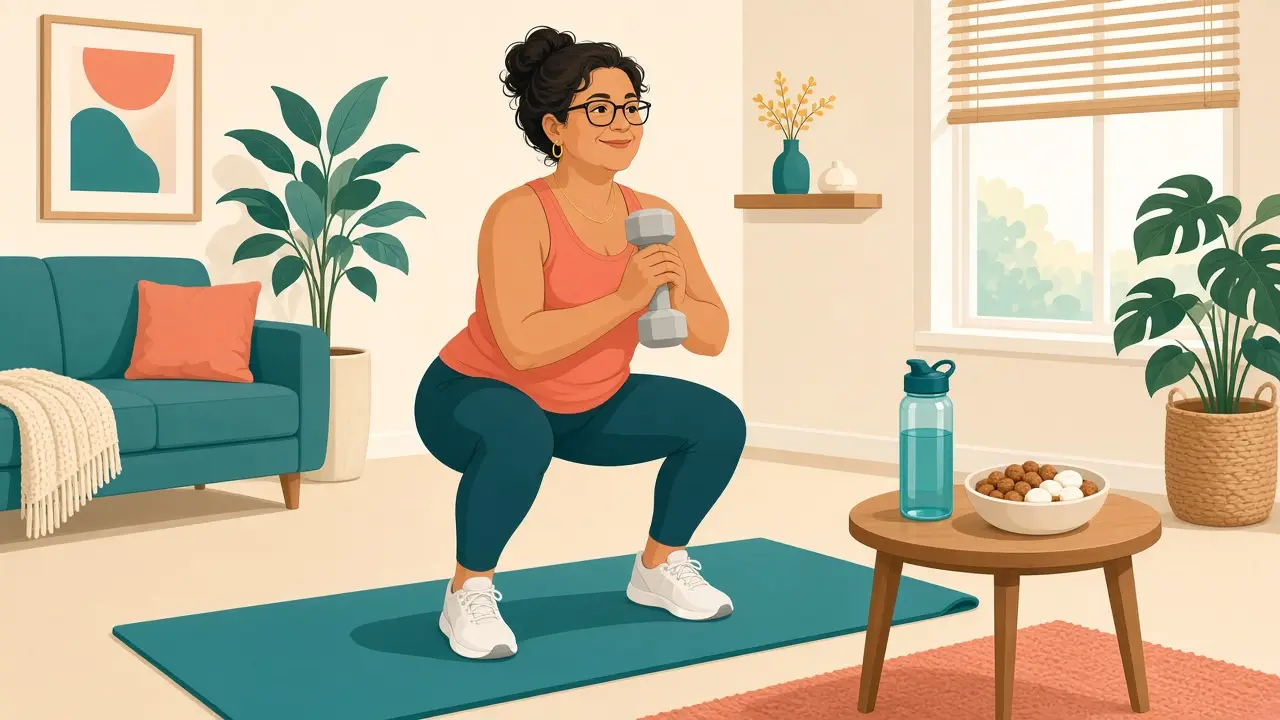
If you're taking a GLP-1 medicine like semaglutide (Ozempic, Wegovy) or tirzepatide (Mounjaro, Zepbound), you've probably noticed something wonderful: you're just not that hungry. That quiet appetite is what makes these medicines work. But it comes with a small catch that's easy to miss. When you eat a lot less, your body doesn't only burn fat. It can also break down some muscle.
The good news? Muscle responds to what you do. With a bit of planning around protein and movement, most people can tilt the balance so that what they lose is mostly fat. This guide walks you through it, step by step, in plain English.
Why muscle matters (more than the number on the scale)
Muscle isn't just about looking toned. It helps you climb stairs, carry groceries, keep your balance and stay independent as you get older. It's also where your body stores and uses a lot of the glucose you eat. Losing too much of it can leave you feeling weaker and may make it harder to keep the weight off later.
So the goal on a GLP-1 isn't simply "lose weight." It's lose fat, keep strength.
How much muscle do people actually lose?
Two big trials scanned a subgroup of participants with DEXA, the same kind of body-composition scan you can book in our DEXA directory:
- Semaglutide (STEP 1): in the DEXA substudy, lean mass made up roughly two-fifths of the weight people lost (published estimates range from about 39% to 45% depending on how it's calculated). Fat still went down much more than lean mass.
- Tirzepatide (SURMOUNT-1): in its DEXA substudy, lean mass made up about a quarter of the weight lost.
Two important footnotes. First, "lean mass" on a DEXA scan isn't only muscle: it also includes water, organs and connective tissue. Second, these trials didn't require a structured protein or strength-training plan, which is exactly the part you can add. Read the full breakdown in muscle loss on semaglutide vs. tirzepatide. A 2024 review of GLP-1 body-composition data comes to a similar conclusion: some lean loss is expected, and protein plus resistance exercise are the main tools to limit it.
Bottom line: you will likely lose some lean mass, as with any diet. What you do with your fork and your muscles shapes how much.
1. Eat enough protein, spread through the day
In 2025, four US organizations (the American College of Lifestyle Medicine, the American Society for Nutrition, the Obesity Medicine Association and The Obesity Society) published joint advice on nutrition for people on GLP-1s. Their suggested protein range during active weight loss is about 1.2 to 1.6 g per kilogram of body weight per day, or roughly 80 to 120 g a day as a practical target. That matches a large 2018 meta-analysis, which found the muscle benefit of extra protein during strength training levels off around 1.6 g/kg/day.
That sounds like a lot when you're full after half a sandwich. A few tricks help:
- Protein first. Eat the chicken, fish, eggs, tofu or Greek yogurt before the rest of the plate.
- Aim for 25 to 30 g per meal, three times a day, instead of one big protein dinner.
- Use dense sources. Greek yogurt, cottage cheese, eggs, fish, poultry, lean meat, tofu, tempeh and lentils.
- Keep a backup. On low-appetite days, a 30 g shake or a high-protein bar fills the gap. We compared the options in best protein shakes and best protein bars.
If you have kidney disease, ask your clinician before raising protein.
2. Lift something, 2 to 3 times a week
Protein is the building material. Strength training is the signal that tells your body to keep the building standing. The US Physical Activity Guidelines recommend muscle-strengthening activity for all major muscle groups on at least 2 days a week, and the 2025 joint advisory suggests pairing GLP-1 therapy with resistance training.
You don't need a gym membership to start. A simple home routine:
- Sit-to-stand from a chair (or goblet squats holding a weight): 2 to 3 sets of 8 to 12.
- Wall or counter push-ups: 2 to 3 sets of 8 to 12.
- Resistance-band or dumbbell rows: 2 to 3 sets of 10 to 12 per side.
- Glute bridges: 2 to 3 sets of 12.
- Carry two grocery bags or dumbbells for 30 to 60 seconds.
Pick a weight that feels hard by the last 2 reps. When it gets easy, add a little weight or a few reps. That gentle "progressive overload" is what keeps muscle growing. For full 2-day home and 3-day gym schedules, see our strength training plans for GLP-1 users.
3. Consider creatine
Creatine monohydrate is one of the most-studied supplements in sports nutrition. In a 2017 meta-analysis of 22 trials in older adults, people who took creatine while doing resistance training gained about 1.4 kg more lean tissue than those who trained without it, and got a bit stronger too. It hasn't been studied much in GLP-1 users specifically, but it's inexpensive and well tested. The usual amount is 3 to 5 g a day. See our creatine ranking for third-party-tested picks, and tell your clinician you take it.
4. Look after fiber and fluids
This sounds unrelated to muscle, but it isn't. If you're constipated or dehydrated, you'll eat even less and feel too tired to train. In the main Wegovy trials, about 1 in 4 people reported constipation, and the FDA label warns that dehydration from vomiting or diarrhea can affect the kidneys.
- Drink water steadily through the day; a sugar-free electrolyte mix can help on hot or rough days.
- Add vegetables, berries, beans and oats, and consider a gentle fiber supplement.
- A basic multivitamin can cover small gaps when your portions shrink.
5. Measure, don't guess
A bathroom scale can't tell fat from muscle. A DEXA scan can, in about 10 minutes, with a very low radiation dose. Many people get a baseline scan when they start (or soon after), then repeat every 3 to 4 months. If lean mass is dropping fast, that's your cue to talk with your prescriber or a dietitian about protein and training.
Prices vary a lot: in our November 2026 check, a single scan ranged from $59.95 at BodySpec to $325 at a Miami performance lab. Compare options in Miami, Los Angeles and New York, or read our DEXA scan cost guide.
A sample high-protein day (about 100 g)
| When | What | Protein |
|---|---|---|
| Breakfast | Greek yogurt (1 cup, plain) with berries and a spoon of chia | ~23 g |
| Mid-morning | Half a ready-to-drink 30 g protein shake | ~15 g |
| Lunch | 3 oz grilled chicken over salad with chickpeas | ~30 g |
| Afternoon | The other half of the shake, or a protein bar | ~15 g |
| Dinner | Small salmon fillet (3 oz), roasted vegetables | ~20 g |
Smaller portions are fine. What matters is that protein shows up at every eating occasion.
This guide is general information, not medical advice. Your prescriber knows your health history and should guide your plan, especially if you have kidney, heart or liver conditions, diabetes medicines that can cause low blood sugar, or a history of eating disorders.
Frequently asked questions
Is muscle loss on Ozempic or Zepbound unavoidable?
Some loss of lean mass happens with any significant weight loss. What you can influence is how much: studies of diet and exercise suggest that enough protein plus resistance training helps people keep more of it.
How much protein should I eat on a GLP-1?
A 2025 joint advisory suggests about 1.2 to 1.6 g per kg of body weight per day during active weight loss, or roughly 80 to 120 g a day. Ask your clinician or a registered dietitian to set your number.
Do I need supplements?
No. Food comes first. Shakes, bars, fiber or creatine are tools that make the targets easier to hit when appetite is low.
When should I see my doctor?
If you feel weak, dizzy, can't keep food or fluids down, have severe constipation or belly pain, or are losing weight much faster than expected, contact your prescriber.
Sources
- Wilding JPH et al. Once-weekly semaglutide in adults with overweight or obesity (STEP 1). N Engl J Med 2021.
- Impact of semaglutide on body composition: exploratory analysis of the STEP 1 study (DEXA substudy).
- Jastreboff AM et al. Tirzepatide once weekly for the treatment of obesity (SURMOUNT-1). N Engl J Med 2022.
- Changes in lean body mass with GLP-1-based therapies and mitigation strategies (review, 2024).
- Nutritional priorities to support GLP-1 therapy for obesity: joint advisory of ACLM, ASN, OMA and TOS (2025).
- Morton RW et al. Protein supplementation and resistance training: meta-analysis. Br J Sports Med 2018.
- Chilibeck PD et al. Creatine supplementation during resistance training in older adults: meta-analysis. 2017.
- US Department of Health and Human Services. Physical Activity Guidelines for Americans, 2nd edition.
- FDA. WEGOVY (semaglutide) prescribing information (revised 11/2025).