What to eat on a GLP-1 when you're never hungry: 25 mini meals
A practical checklist of small, protein-forward meals and snacks for low-appetite days. These are ideas, not a prescribed diet. Protein amounts are typical label or USDA-style estimates.
By the Lean But Strong editorial team · Updated November 25, 2026 · 5 min read · Not medical advice
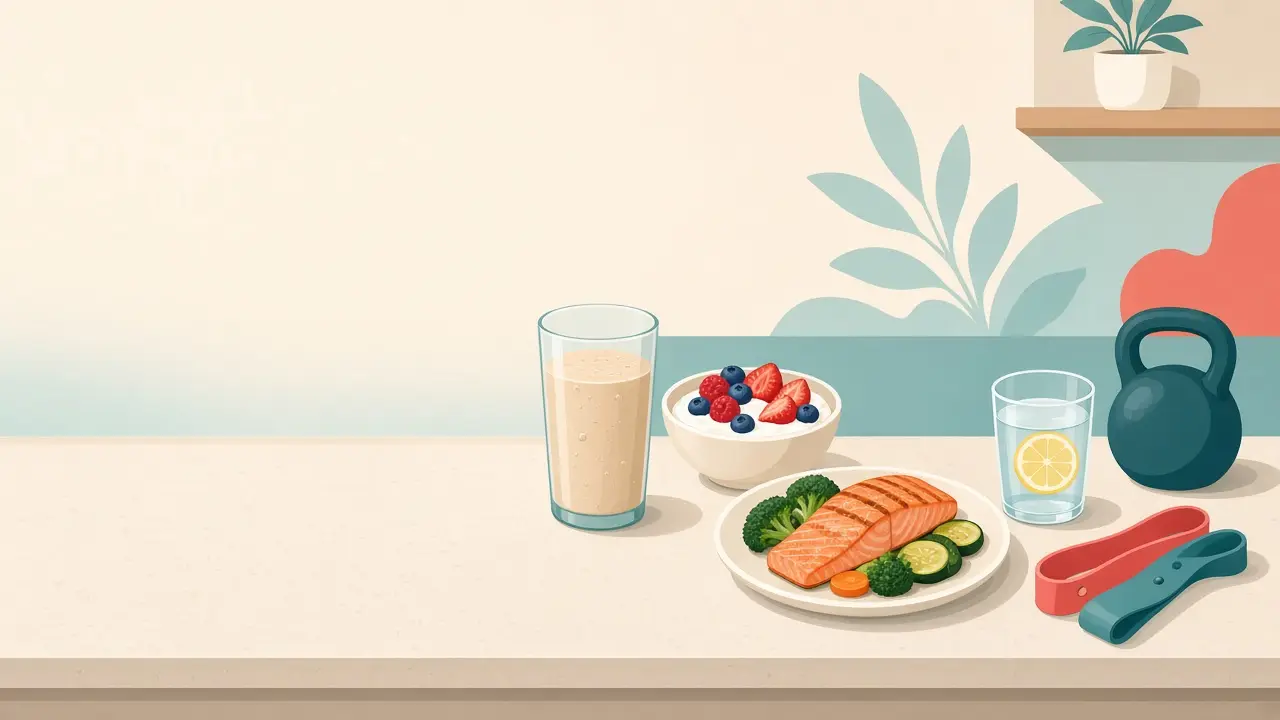
Direct answer: Splitting food into 4 or more smaller, protein-first mini meals (~15–30 g each) helps you reach a typical clinician-guided range (80–120 g/day) without feeling overly full. On nausea days, see our official GLP-1 digestion guide.
The 2025 joint nutrition advisory for people on GLP-1 medicines suggests a practical protein range of about 80 to 120 g a day during weight loss (or 1.2 to 1.6 g/kg), individualized by a clinician or dietitian. When a full plate feels impossible, smaller “mini meals” are an easier way to get there. This is a checklist, not a treatment plan. Skip anything that worsens nausea, and stop if you have a food allergy or a medical restriction.
How to use this list
- Aim for 25 to 30 g of protein, three times a day, if that matches the target your clinician set. Two mini meals can add up to one of those servings.
- Eat the protein first. Stop when you are comfortably full.
- Keep two backups in the house: a shake and a high-protein bar you already know your stomach tolerates.
The 25 mini meals
| Mini meal | When | Typical protein | Visual |
|---|---|---|---|
| Greek yogurt cup + berries | Breakfast or snack | ~15–20 g | |
| Cottage cheese (½–¾ cup) + pineapple or tomato | Snack | ~14–20 g | |
| Two eggs + a slice of toast | Breakfast | ~14–18 g | |
| Egg-white omelette with spinach | Breakfast | ~20–25 g | |
| Skyr or Icelandic yogurt, small tub | Snack | ~15–20 g | |
| Fairlife or similar ultra-filtered milk, 1 cup | Drink | ~13 g | |
| A 30 g protein shake, sipped slowly | Anytime backup | ~25–30 g | |
| String cheese (2) + apple | Snack | ~14 g | |
| Turkey or chicken slices (3 oz) + mustard | Lunch plate | ~20–25 g | |
| Canned tuna (3 oz) + crackers | Lunch | ~20 g | |
| Canned salmon on cucumber rounds | Snack | ~15–18 g | |
| Leftover roast chicken, small portion | Mini lunch | ~20–25 g | |
| Tofu cubes (150 g), pan-warmed with soy | Dinner plate | ~18–20 g | |
| Edamame, 1 cup in shells | Snack | ~17 g | |
| Lentil soup, 1 cup | Mini meal | ~12–18 g | |
| Black bean quesadilla, small | Lunch | ~15–20 g | |
| High-protein yogurt drink | On the go | ~15–25 g | |
| A protein bar (≥17 g, lower sugar) | Backup | ~17–28 g | |
| Shrimp (3 oz) + cocktail sauce | Mini dinner | ~18–20 g | |
| Smoked salmon (2 oz) + light cream cheese on a rice cake | Breakfast | ~14–16 g | |
| Protein-fortified oatmeal | Breakfast | ~15–20 g | |
| Whey or casein pudding, homemade | Dessert-style | ~20–25 g | |
| Tofu smoothie (silken tofu + frozen berries) | Drink | ~15–20 g | |
| Turkey meatballs, 3 small | Mini dinner | ~15–20 g | |
| Skim ricotta (½ cup) with cinnamon | Snack | ~14 g |
Protein figures are typical values, not lab-measured portions. Check the label of the product you buy. See also our 12-bar protein comparator, how much protein and the muscle guide.
A sample day (about 100 g)
- Morning: Greek yogurt + berries, then a few egg bites if still hungry (~30 g).
- Afternoon: tuna and crackers, or a 30 g shake if cooking feels like too much (~25–30 g).
- Evening: tofu or a small piece of chicken plus a soft vegetable (~25–30 g).
- If you fall short, sip the rest of a shake rather than forcing a large dinner.
Print this page or save it on your phone. If you left your email on our list, we stored it so we can send a copy when email is switched on; nothing has been sent yet.